2023 EVENTS

Sat 5th March 2023 

. 

Sat 30th Sept 2023
Sun 8th Oct 2022
Multisport Adventure Ireland was formed in 2010 by Paul Mahon with the aim of providing quality, value for money and fun sports events suitable for a broad level of fitness levels
Bespoke individual and group training for all levels of adventure racing enthusiast is also provided.
Our aim has always been to provide well organised and good value events that you will appreciate and will tell others about.
 Paul has been a prominent and successful participant in a wide range of outdoor sports over the past 20 years since returning to Ireland after working on management of engineering projects in the UK, Asia and Australia.
He is an active member of Setanta Orienteering Club, the Irish Mountain Running Association & Parnell AC
He has served for several terms on club & assciation committees in a variety of positions and organised many of their events.
He was a founding member of Adventure Racing Ireland in 2020 and currently serves as Treasurer.
He has represented Ireland at World Championship level at Mountain Bike Orienteering and Adventure Racing.
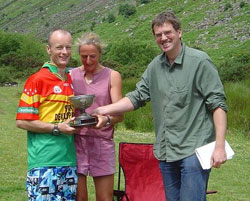
His success on the hills and particularly in team based adventure race events speaks for itself:
Successes in Adventure Racing to date have included:
Carlingford Lough Endurance Challenge (7 times), Ballyhoura Beast (4), National Adventure Marathon (2), Blessington Adventure Race (2), Outsider Adventure Race (2), Wicklow 24 hr Rogaine (7), Irish Adventure Challenge, Galeforce 12, Kilbroney Challenge, Annacurragh Bike Adventure, Lough Derg Monster (2), Raid 24 Hr AR (3), Shamrock 24hr AR, TEAR 24 Hr AR (2), Dingle 24 Hr AR, Coast 2 Coast (2 Day pair), Donegal Beast 48+ Hr AR, Quest 24 AR and several other team and solo adventure races.
Paul was one of the group who set a recognised Guinness World Record in 2011 when each team member successfully summited Croagh Patrick 12 times in a 24 hour period - a cumulative 18,086m (59,337 feet) of cumulative ascent and descent - Record Report HERE
In recent years major successes included included 1st place on the Outfront Events team at the 50+hr Beast AR in Donegal (2018), 1st & 2nd individual in the Quest 24 (246km) AR in Kerry (2018 & 2019) and 1st mixed/ vet team in Elite class of the 2 day Mourne Mountain Marathon in several recent years
In 2022 Paul was on the winning 2 preson team in the Rogaine 24 hour orienteering event held in the hills of Wicklow and won all 3 Navigation challenge events on the IMRA calendar.
Already in 2023 he was on the winning team at the 24 hour Rogaine Ireland event, first pair team at Iterra-lite (60+ hours) Adv Race in Scotland, placed 5th individual overall in Dingle Adv Race in addition to age category wins at Quest Kenmare, Snowdonia Ultra & many IMRA races
Paul has raced on 5 continents and has enjoyed podium success with several international AR teams.
MSAI is the vehicle through which this experience is being used to provide top quality events and tailored training in Ireland.
The Team aspect of Adventure Racing is something no amount of solo training can replace and is a vital and often overlooked part of adventure race preparation.
In this particular aspect of racing Paul's experience and aptitude has been proven by race success on many occasions.
Before turning to fulltime event organisation, Paul worked throughout the world on a variety of process and pharmaceutical industry projects in project engineering, construction and project manager roles. He is a qualified Chartered Engineer.
Paul is available to advise on all aspects of Event Organisation and in particular he specialises on Course Design for all types of races and sporting events
To learn more please contact Paul at:
outfrontevents@gmail.com
or 086-3503994
No one can teach you everything but there is always room to keep learning
Checkout some useful adventure racing tips below!


Top Adventure Racing Tips
By Paul Mahon of Multisport Adventure Ireland
- Clothing selection:-
Select suitable clothing to suit expected weather conditions and your expected progression in the race with a “What If” allowance in terms of a bike mechanical/ crash/ injury/ “bonk”!
Many start off races over dressed and then need to remove layers within a short distance of the start or persist in wearing too much clothing which can result in excessive sweating and possible later race cramping problems.
For certain stay warm and dry before a race but once the race commences you will warm up so generally it is advisable to remove rain gear before the start of the race.
- Footware selection:-
Ensure footwear is well broken in before event
This may involve having trained and broken in more than one pair of shoes to take account of underfoot conditions that may change depending on weather in the days before an event.
To date there is no “One Size Fits All” in terms of footwear brands and types.
Go to a reputable shop and get advice as to what suits you.
Do not be driven by the “go faster stripes” type of shoes that are primarily aimed at the fashion rather than function market.
For most adventure racing events it is generally best to use trail shoes even if some of the running is on the road.
The slight advantage of a road shoe is often well negated once you venture off road.
Should you slip or fall because of incorrect footwear selection then the seconds you gain on the road may pale into insignificance compared to the discomfort or injury that may threaten your chances of finishing a race or the rest of the season.
- Use a suitable bag:-
Select a rucksack / bum bag to suit your needs for the event.
In general you are looking to have minimal weigh and size and a bag that is functionally designed as this will ensure most comfort and optimal performance for you.
The larger the bag you select, the more likely you are to fill it with stuff you don’t really need
Ensure you have practiced running in whatever bag you think you will wear with your race kit inside and that your bag does not bounce, provides quick access to food with hip pockets, water bottle holder, etc
- Plan specifically for each race:-
Find out the detail of the course (distances, terrain, profile, etc) and train accordingly
For the likes of Quest Glendalough, if you can’t make it to Wicklow to train on the course itself then you should cycle to some hills via a couple of hilly road climbs and “run” up and down some mountain followed by another cycle afterwards.
For the likes of Quest Achill you could start a paddle (your choice in race too of course) if possible, then transition straight into a flattish run before a climb on foot and returning by a similar route to your bike by running a flat section and then biking an undulating route.
Know what your reasonable pace and finish time should be and don’t be tempted to go too fast at the start despite what everyone else is doing.
It is better to start slowly and be capable of finishing strongly in the second half of the race.
- Prepare your Bike:-
A bike “failure” is the most likely reason that you might not finish a race and most “failures” can be avoided by proper preparation.
Ensure your bike is in good condition and not likely to cause you problems.
Have your bike serviced by a reputable shop if you are not able to do this properly yourself.
This preparation includes tyre type and pressure selection to suit the terrain expected.
Know how to change a tube and ensure you carry the correct tools to do this.
If possible you should carry a chain tool and “Power Links” to repair a chain break quickly and of course know how to use them.
- Bring your mandatory kit:-
Mandatory kit is selected by race organisers for the safety of you so do cooperate and bring whatever the organisers tell you is mandatory.
Seconds saved by deciding not to carry the mandatory kit will seem such a waste if you need your first aid kit or space blanket when injured on the side of a mountain!
- Take account of Mother Nature:-
Be prepared for changed weather conditions – mentally and physically
Just because it is raining does not mean you should cancel a planned training session.
Train in all weathers and then whatever Mother Nature throws at you on race day will be somewhat familiar particularly in terms of bike control on wet road descents, running down hills and of course correct clothing and footwear selection.
- Plan your food strategy appropriate to the race:-
Ensure you have sufficient food for the full duration of the event either on your person from the start or, if the race format allows it, in an easily accessible format on your bike.
You can use a small bag on your handlebars / cross bar or alternatively by using tape to attach bars and gels to your bike.
If dong this ensure you have not interfered with the correct working of brakes and gears.
Practice all your eating in training and only eat bars/ gels that work for you
Ensure you have practiced eating and drinking from bottles on your bike in particular and that you have sufficient control of your bike when doing so.
- Hydrate often and early:-
Water alone is usually not sufficient for most unless in a short event (< 2 hours) or the weather is very cold.
You should only use hydration products that work for in training for your needs
Some products that are available for hydration include NUUN, Hi Five, Deoralyte, etc are generally easy to take but the key is to hydrate before you become dehydrated.
Studies have shown that being 2% dehydrated can result in a 20% drop in performance!
You may not actually feel thirsty until you are 6% dehydrated at which stage some studies have shown that there is a 60% drop in energy available.
If you do feel a cramp coming on then get electrolytes into you quickly preferably in the proportions recommended by the suppliers of hydration products.
- Expect the unexpected:-
Despite the best preparation in terms of training, gear selection, nutrition, you should be prepared mentally for the unexpected as it sometimes does happen
If you have so unexpected problems along the way just deal with them quickly and efficiently and get back to racing ASAP but don’t be tempted to change your pace or strategy in order to make up time lost fixing a puncture, etc
Enjoy Your Race Day out and the night to follow – Well Done You 
